
Ghana Maritime Authority Launches Major Inland Water Safety Drive, Commissions 200 Safety Guards and Introduces ‘No Life Jacket, No Travel’ Policy
The Government of Ghana has taken a significant step towards improving safety on the country’s inland waterways with the commissioning of the first batch of 200 Inland Water Safety Guards and the launch of the Life Jackets for Safety and Livelihood Initiative, a nationwide programme designed to reduce drowning incidents and save lives.
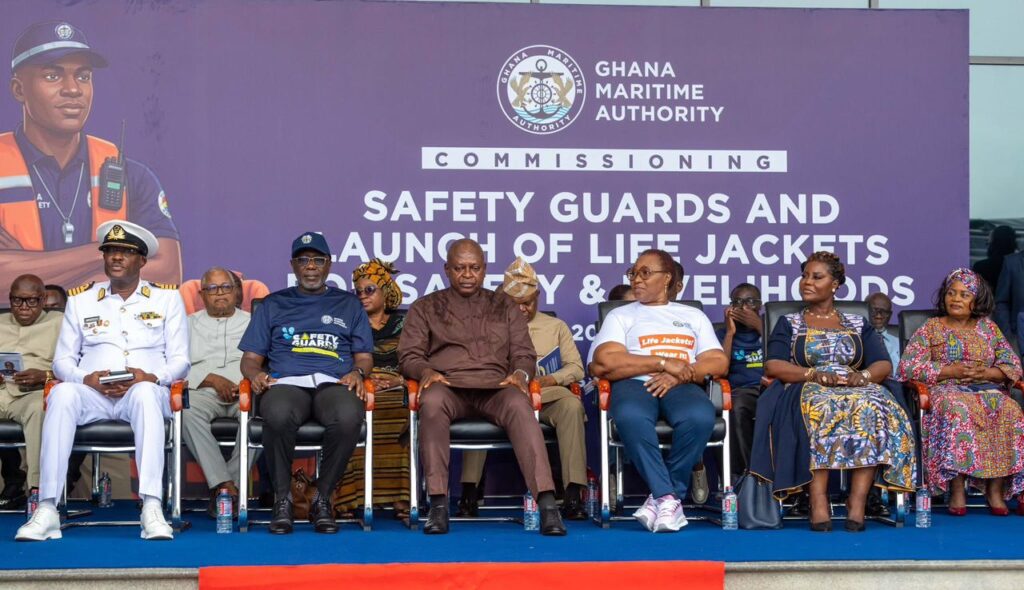
The event, held at the headquarters of the Ghana Maritime Authority (GMA) in Accra, brought together key stakeholders from the transport sector, traditional authorities, inland water transport operators, fishing communities, Members of Parliament, Metropolitan, Municipal and District Chief Executives, and representatives of various government agencies.
The initiative was officially launched on behalf of President John Dramani Mahama by the Minister of Transport, Joseph Bukari Nikpe, who reaffirmed government’s commitment to ending the recurring tragedies that continue to claim lives on rivers, lakes and lagoons across the country.
Addressing participants at the ceremony, the Minister described the frequent loss of lives on inland waterways as a national concern that requires urgent and decisive action.
He recalled several tragic incidents that have occurred over the years, including a devastating accident in Saboba where seventeen students reportedly lost their lives while crossing a river, as well as another fatal incident at Kete Krachi that claimed the lives of several residents.
According to the Minister, President Mahama has directed relevant institutions to intensify efforts aimed at ensuring that such avoidable tragedies become a thing of the past.
“We say a big no to the lives that we lose on a yearly basis at the crossing points of our rivers. President Mahama has made it clear that we must work together to put a stop to these needless deaths suffered by our brothers and sisters as they go about their daily activities,” he stated.
He explained that the commissioning of the Safety Guards forms part of a broader strategy developed by the Ministry of Transport and the Ghana Maritime Authority to strengthen safety enforcement and promote responsible travel on inland waterways.
The newly commissioned officers have undergone extensive training and have been equipped with the authority and resources needed to enforce safety regulations, educate water transport users and ensure compliance with maritime standards.
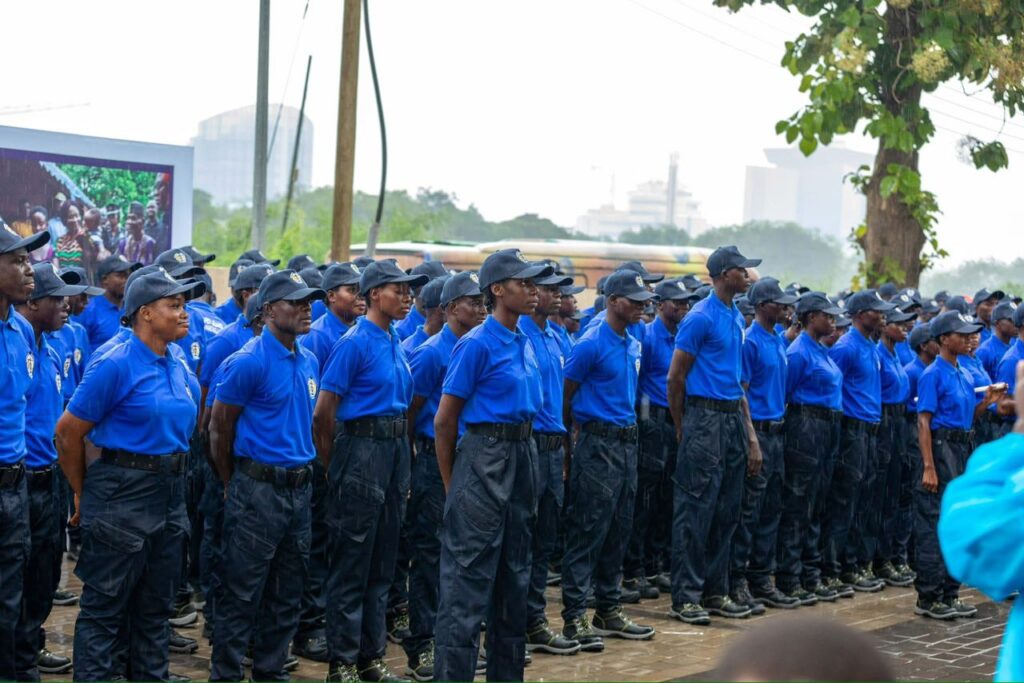
The Minister further disclosed that all 200 recruits were selected from the communities in which they will serve, enabling them to effectively engage local residents because of their familiarity with the terrain, waterways and community dynamics.
“This is decentralisation and community ownership in action. These recruits understand the people, the environment and the challenges in their respective communities. We believe they are uniquely positioned to help improve safety on our waterways,” he noted.
A major highlight of the initiative is the nationwide implementation of the ‘No Life Jacket, No Travel’ policy, which seeks to make the wearing of life jackets mandatory for all passengers and operators using inland water transport.
To support the policy, government has introduced a three-pronged approach to make life jackets readily accessible and affordable.
Under the arrangement, approved life jackets will be sold at subsidised prices to individuals and boat operators. Additionally, rental schemes will be established within communities, allowing passengers to rent life jackets at minimal cost before embarking on their journeys. A hybrid model combining both approaches will also be introduced to ensure that no traveller is denied access to safety equipment.
The Minister compared the initiative to the use of seat belts in vehicles and helmets on motorcycles, stressing that life jackets must become a standard safety requirement for water transport.
“When you board a car, you wear a seat belt. When you ride a motorcycle, you wear a helmet. Likewise, when you board a boat, you should wear a life jacket. It is not intended to inconvenience anyone; it is intended to save lives,” he emphasized.
Speaking to HAFIZ TV on the sidelines of the event, the Director-General of the Ghana Maritime Authority, Dr Kamal-Deen Ali, a retired Naval Captain, described the programme as one of the most comprehensive inland water safety interventions undertaken by the Authority in recent years.
According to him, upon assuming office, the Authority identified significant gaps in enforcement and recognised the need for a stronger presence in inland water communities.
“We realised that while some interventions had been undertaken over the years, there remained a significant enforcement deficit. Safety is a continuous process and we needed to expand our efforts to ensure that safety becomes sustainable and effective,” he explained.
Dr Ali revealed that the Authority has expanded its operational footprint beyond Accra, Tema and Takoradi by establishing several additional offices across inland water transport corridors to improve monitoring and enforcement.
He noted that the creation of the Inland Water Safety Guards was intended to provide a visible and effective frontline presence capable of promoting compliance and educating the public on safety regulations.
The Director-General further explained that the Life Jackets for Safety and Livelihood Programme has been carefully designed to ensure long-term sustainability rather than relying solely on free distribution.
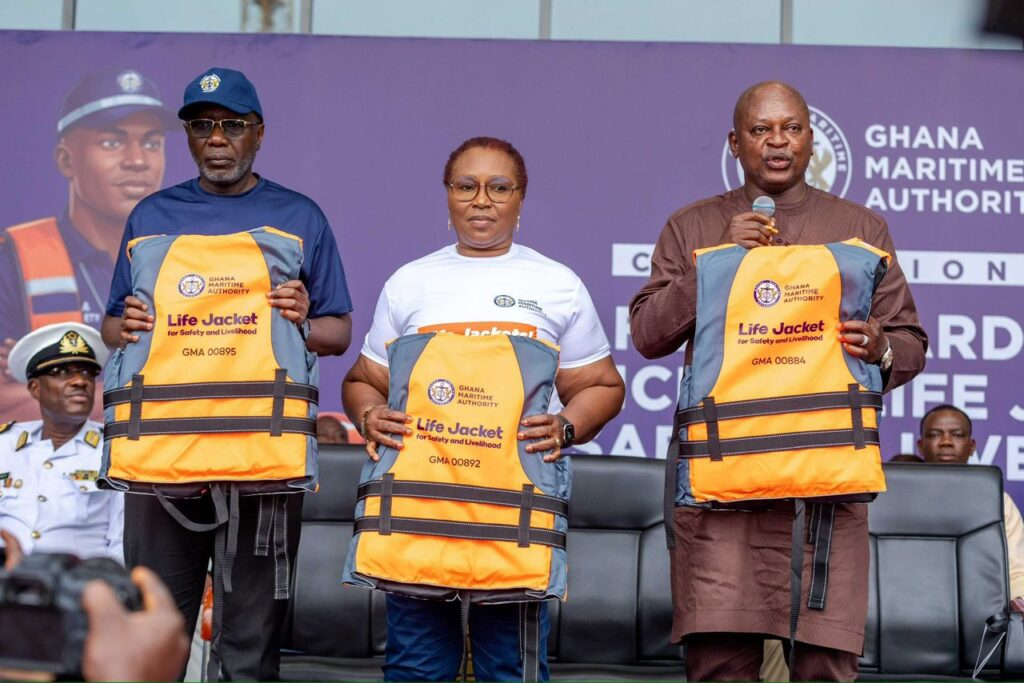
“We cannot continue to provide life jackets for free indefinitely. We must create a system that guarantees availability and accessibility at all times. That is why we have introduced subsidised sales, rental schemes and a hybrid model,” he said.
He disclosed that passengers who do not own personal life jackets and whose boat operators fail to provide them would be required to rent one before boarding a vessel.
Dr Ali also indicated that enforcement would initially focus on education, awareness creation and stakeholder engagement before progressing to stricter sanctions where necessary.
“We are beginning with education and engagement because people must first understand the importance of these measures. However, our objective remains clear — no life jacket, no boarding, and no life jacket, no travel,” he stressed.
Meanwhile, inland water transport users have welcomed the initiative and pledged their support for its implementation.
Delivering a commitment message on behalf of over 1,600 inland water communities spread across 52 Metropolitan, Municipal and District Assemblies, President of the National Inland Canoe Fishermen Council, Jacob Kabore Tete Adike, assured government and the Ghana Maritime Authority of the full cooperation of water transport users.
He pledged that community members, boat operators, fishers, passengers and traditional leaders would support the Safety Guards, comply with regulations and promote safety awareness within their communities.
“We shall wear life jackets, observe safety regulations, support safety officers and work together to ensure that every journey on our waterways is a safe journey,” he declared.
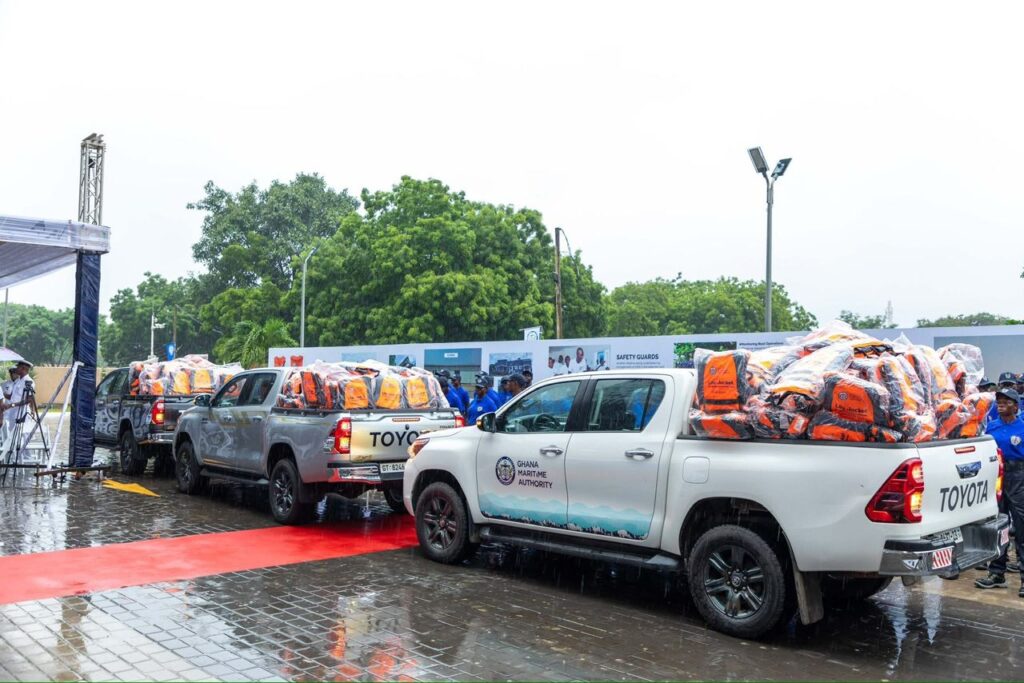
Mr Adike commended the Ghana Maritime Authority for its consistent engagement with communities through safety education, boat registration exercises and awareness campaigns, noting that such interventions have already contributed to a reduction in accidents on some inland waterways.
He also praised the leadership of the Authority for maintaining close relations with community leaders and ensuring that residents are actively involved in efforts to improve water transport safety.
The commissioning of the first batch of 200 Inland Water Safety Guards marks the beginning of a nationwide rollout expected to cover major inland water transport routes across the country.
Stakeholders at the event expressed optimism that the combined deployment of trained Safety Guards and increased access to life jackets will significantly reduce drowning incidents, strengthen enforcement and promote a lasting culture of safety on Ghana’s inland waterways.
