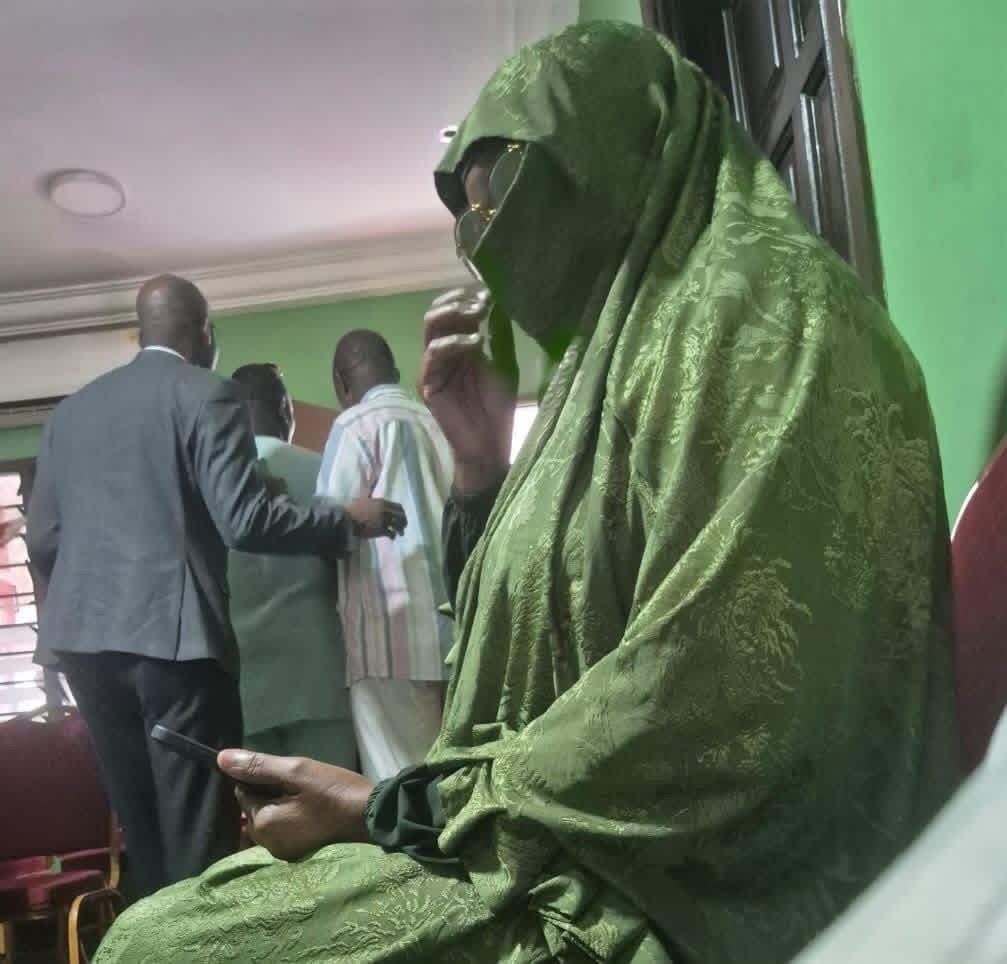
The appearance of Hajia Amina, widow of the late Ayawaso East Member of Parliament Mahama Naser “Mac Naza” Toure, before the National Democratic Congress (NDC) Ayawaso East Vetting Committee has continued to generate intense public debate, particularly among Muslim communities, over the observance of ʿiddah and political participation.
Hajia Amina’s vetting, part of internal party processes ahead of the forthcoming by-election, has drawn mixed reactions on social media, with commentators divided over whether her public engagement aligns with Islamic teachings governing the mourning period for widows.
Under Islamic law, ʿiddah requires a widow to observe a waiting period of four months and ten days following the death of her husband, during which remarriage is prohibited and certain public activities are traditionally restricted. The practice is rooted in Qur’anic injunctions, including Surah Al-Baqarah (2:234).
Quoting the verse in a Facebook discussion, Hamdiya Bawa wrote:
“And those who are taken in death among you and leave wives behind – they shall wait four months and ten days… And Allah is fully acquainted with what you do.”
The vetting appearance has reignited broader conversations on how Islamic obligations intersect with modern political timelines.
Some commentators questioned the necessity of Hajia Amina’s participation at this stage. Huseini Abdul Basit asked:
“So she chose the world more than adherence to the Islamic ruling?”
Others argued that the Qur’anic verse does not explicitly prohibit leaving one’s home during the mourning period. Ideas Dos Santos noted:
“The ayat never talked about staying indoors. It is basically telling her she can’t remarry unless after four months ten days. She is free to go out if necessary.”
The debate has also drawn calls for restraint and mutual respect. Adamu Fati urged calm, saying:
“Please people should respect their speech. Only Almighty Allah knows the loser. Let us respect each other and obey the laws.”
Meanwhile, some users framed the issue as a matter of personal accountability. Torgbe Fodo commented:
“It is her choice and she will have to live with the consequences.”
Others questioned the practical implications should she secure the party’s nomination. Daasebre Osafo Kantanka asked:
“So suppose she wins, will she wait for the mourning days to be over or go to Parliament right away?”
The discussion has extended beyond religious interpretation to party procedure. Responding to criticism, Gerrard Amos argued that political rules must also be respected.
“If she wants to contest, she must attend the vetting in person or stay indoors to uphold her beliefs,” he wrote.
Despite the controversy, some voices have warned against personal attacks. Abdul Haq described the tone of the discourse as troubling, saying:
“You are setting the woman for unnecessary and unwarranted attacks; this is highly unethical.”
The NDC has not officially commented on the religious concerns raised, maintaining that the vetting exercise forms part of routine internal processes. Supporters of Hajia Amina have also pointed to her earlier public assurance that her political activities would not undermine her faith.
During her declaration of intent, Hajia Amina stated:
“I am currently observing my idda, and I wish to clearly state that this sacred obligation will be fully respected. My decision to contest and the activities around it will be carried out in a manner that does not compromise my idda or the teachings of Islam.”
The Ayawaso East by-election, scheduled for Tuesday, 3 March 2026, follows the death of the sitting MP on 4 January 2026. As preparations continue, the unfolding debate reflects broader questions about faith, personal conviction and political participation within Ghana’s pluralistic democracy.