
The Muslims Peace Committee in the Ashanti Region has lauded Ghana’s Constitution Review Committee (CRC) for accepting and considering a memorandum calling for an end to the use of “hometown” or ancestral origin as a basis for denying citizenship rights to persons of Zongo descent born in Ghana.
In a press release issued, the group described the Committee’s decision as a bold and progressive step toward promoting equality and national unity.
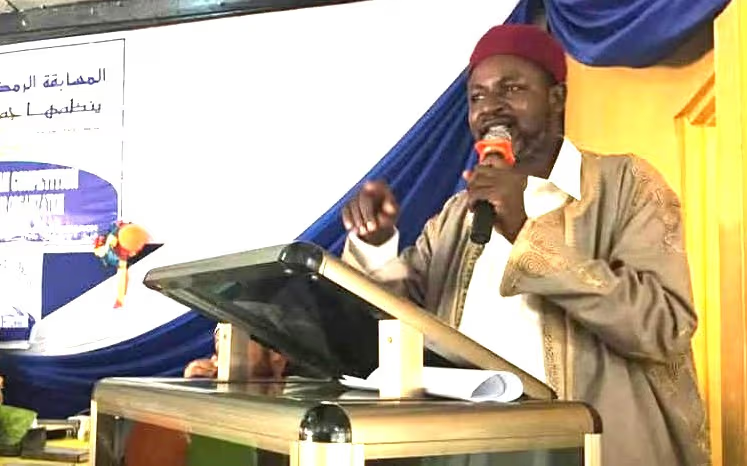
Regional Chairman of Muslims Peace Committee, Sheikh Mohammed Ridwan, particularly praised the Chairman of the CRC, Professor H. Kwasi Prempeh, for what he termed exemplary leadership, open-minded engagement, and constitutional foresight in addressing the lived realities of many Ghanaians raised in urban and cosmopolitan communities.
According to the statement, the CRC’s recommendations, submitted to President John Dramani Mahama on Monday, December 22, 2025, mark a significant milestone in Ghana’s constitutional development.
The proposals seek to resolve longstanding challenges faced by citizens who cannot trace their ancestry to a specific traditional hometown, a situation that has historically led to exclusion and administrative barriers.
Sheikh Ridwan emphasized that the Committee’s work reinforces the principle that citizenship is a constitutional and legal status, not one determined by ethnic lineage or chieftaincy affiliation.
He noted that this approach aligns with democratic values, international human rights standards, and Ghana’s evolving social realities.
The Muslim cleric further observed that the acceptance of the proposal offers renewed hope to thousands of Ghanaians of Zongo descent and other affected communities who, despite being born and raised in the country, have struggled to fully enjoy their citizenship rights.
Sheikh Ridwan called on Parliament, civil society organisations, traditional authorities, and the general public to support the implementation of the CRC’s recommendations in the national interest. He stressed that an inclusive approach to citizenship would strengthen national cohesion and foster a shared Ghanaian identity.
“Ghana belongs to all who are born of her, live in her, and pledge allegiance to her Constitution,” the statement concluded.
By Ibrahim Abubakar
