
Government Communications Minister Felix Kwakye Ofosu says he will push for discussions on expanding local-language fact-checking and media literacy as PenPlus Bytes marks 25 years with the launch of a research report and AI-powered platform.
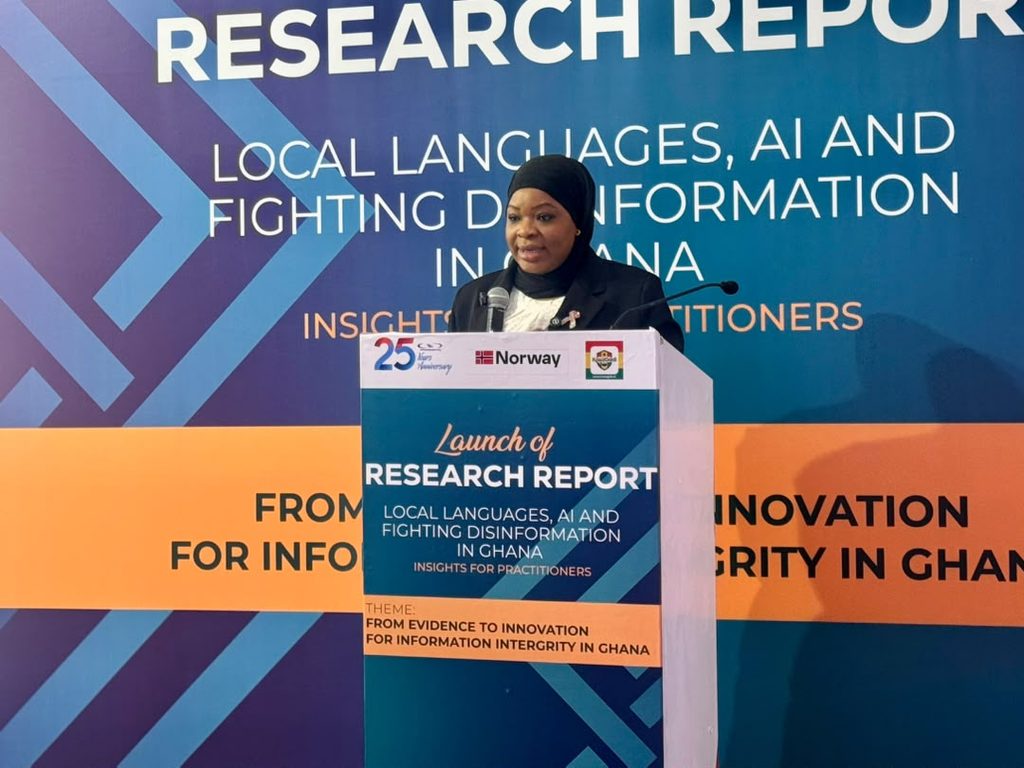
The Government of Ghana is to explore ways of strengthening local-language fact-checking and media literacy as part of efforts to tackle disinformation, following findings that language barriers can make it harder for people to access and verify reliable information.
Minister of State in charge of Government Communications and Presidential Spokesperson, *Hon. Felix Kwakye Ofosu, announced the intended steps in a speech delivered on his behalf by Deputy Presidential Spokesperson *Shamima Muslim at an event marking the 25th anniversary of PenPlus Bytes in Accra on Thursday, 15 October 2026.
The event, held at the Ghana–India Kofi Annan Centre of Excellence in ICT under the theme “From Evidence to Innovation for Information Integrity in Ghana,” featured the launch of a research report on local languages, artificial intelligence (AI) and disinformation, alongside a demonstration of KasaGaDi.ai, a multilingual fact-checking platform.
In his address, Mr Kwakye Ofosu said he would table the report at the next strategy meeting and propose discussions with the Ministry of Communication, Digital Technology and Innovation on a language-first approach to counter-disinformation tools and media literacy campaigns.
The proposal would seek to progressively make state-supported initiatives available in Ghana’s 12 approved Ghanaian languages. He also expressed the government’s willingness to engage PenPlus Bytes as a learning partner to pilot and test KasaGaDi, with privacy and consent safeguards.
The proposals were presented as areas for further engagement and exploration, rather than as an already adopted national programme.
Language gap poses a challenge to fact-checking
The report, titled Language as a Vector: Examining the Role of Local Dialects and Artificial Intelligence in Disinformation Dissemination and Mitigation in Ghana, examines how language and trust influence the spread of misleading information and efforts to counter it.
Produced under the Ghana Anti-Disinformation Coalition Project, coordinated by PenPlus Bytes with support from the Government of Norway, the study surveyed 469 Ghanaians. It drew on responses gathered by 41 trained field assistants using a 68-question survey.
A central finding is that Ghana’s vulnerability to disinformation is not simply a matter of digital literacy. It also reflects a mismatch between the languages people use and trust in everyday communication and the languages available through many verification and AI-based detection tools.
Presenting the findings, Mr Kwakye Ofosu highlighted the role of familiar voices, proverbs and trusted WhatsApp groups in shaping people’s responses to information. Messages delivered in familiar local languages may carry a level of credibility that allows misleading claims to circulate before they can be checked.
The research also points to the role of good intentions in the spread of false information. According to the figures cited in the speech, 85.3 per cent of respondents who shared misinformation did so because they believed the information would help or inform their communities.
The finding suggests that efforts to curb disinformation must address not only deliberate deception but also the sharing of inaccurate claims by people who believe they are helping others.
Awareness of AI detection tools remains limited
The speech also highlighted a gap between public interest in AI and awareness or use of AI-based tools for detecting misleading information.
While 70 per cent of respondents said AI could help address disinformation, 67 per cent were unaware of or uncertain about AI-based detection tools. The report further indicated that 32.2 per cent knew such tools existed, while 22.2 per cent said they had used one.
The findings point to the need to make verification tools more accessible and relevant to the people expected to use them.
Mr Kwakye Ofosu identified three lessons for government and the Information Services Department (ISD): fact-checking and media literacy efforts must move beyond an overwhelming reliance on English; solutions must be designed around people’s everyday needs; and AI tools must better accommodate Ghanaian languages if they are to earn public trust.
He also said he would engage the ISD, the Ghana Broadcasting Corporation (GBC) and community radio networks to explore the possibility of short, five-minute local-language fact-checking segments. The idea, he said, would be considered as an editorial experiment rather than an established national programme.
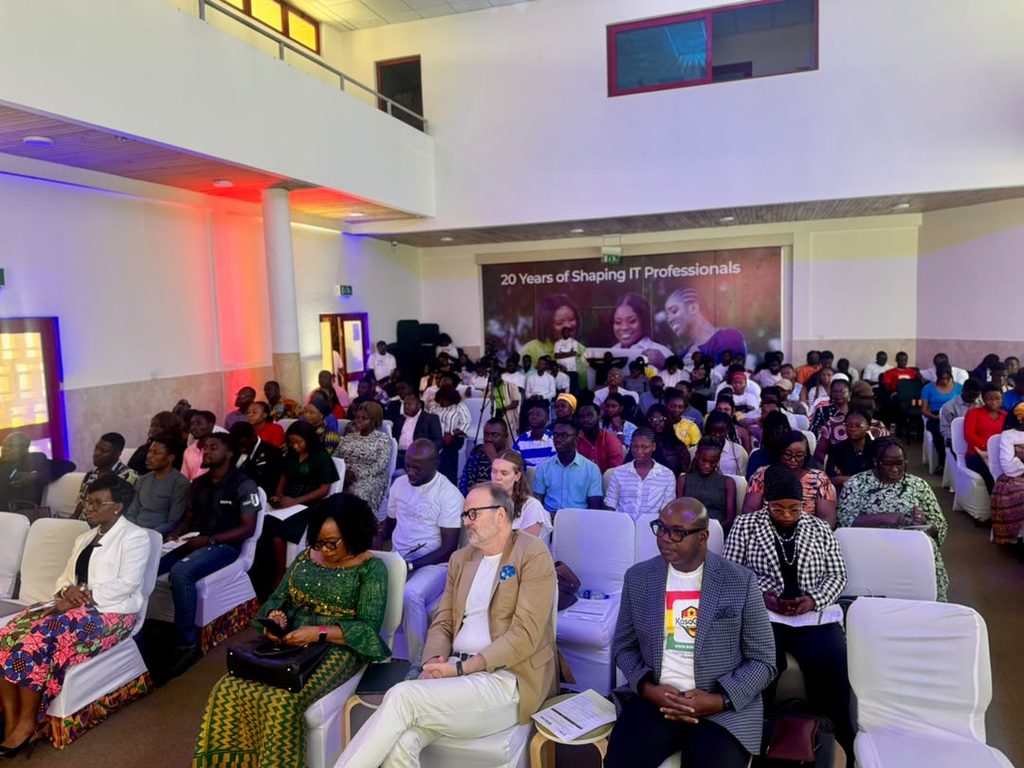
KasaGaDi brings fact-checking closer to local audiences
A key feature of the anniversary event was the launch and demonstration of KasaGaDi.ai, a locally developed, multilingual AI-powered fact-checking marketplace intended to help users access verified information in languages they understand.
The platform is initially focused on Twi and Hausa, with plans to expand its language coverage. PenPlus Bytes has identified community radio stations and grassroots audiences as important beneficiaries, particularly where access to reliable, locally relevant fact-checking content can be limited.
The proposed government engagement would allow the organisation and relevant public institutions to explore how the platform could support information monitoring and verification, while ensuring that privacy and consent are protected.
The launch reflects a wider shift in the organisation’s approach to information integrity: combining technology with media literacy, community engagement and accessible communication rather than relying on fact-checking after false claims have already spread.
Norway reaffirms support for information integrity
The event also highlighted the role of international partnerships in strengthening Ghana’s response to disinformation.
The Government of Norway, through the Royal Norwegian Embassy, has supported the Ghana Anti-Disinformation Coalition Project. Norwegian Ambassador John Mikael Kielland underscored the importance of credible information to democracy and welcomed efforts to develop tools that respond to Ghana’s linguistic diversity.
His remarks also recognised the importance of how AI is used, noting that technology’s value depends on its application. He congratulated PenPlus Bytes on its 25 years of work and acknowledged the support provided through Norwegian taxpayers’ funding.
The event brought together the themes of research, innovation and collaboration, with speakers pointing to the need for tools and interventions that reflect the languages and communication practices of Ghanaian communities.
A quarter-century of media and civic engagement
The launches formed part of PenPlus Bytes’ 25th anniversary, marking a quarter-century of work at the intersection of technology, media and democratic participation.
The organisation has undertaken media literacy outreach through initiatives such as its Caravan of Hope, produced educational materials including comic books, and trained journalists, public officials, academics, researchers, influencers and WhatsApp administrators. Its programmes have also sought to include groups such as persons with disabilities and market women.
PenPlus Bytes has previously deployed a locally developed disinformation detection platform during Ghana’s elections to identify potentially misleading social media content and support fact-checking partners in responding to claims.
Its executive director, Jerry Sam, has emphasised that fact-checking alone cannot resolve the problem, arguing for greater investment in “pre-bunking” — helping people recognise and assess misleading claims before they spread.
The anniversary event therefore served both as a celebration of the organisation’s work and as a platform for presenting new research and tools aimed at improving information integrity.
In his closing remarks, Mr Kwakye Ofosu stressed that countering disinformation would require credible information to reach people in the languages they use in their daily lives. He formally launched the research report and witnessed the
