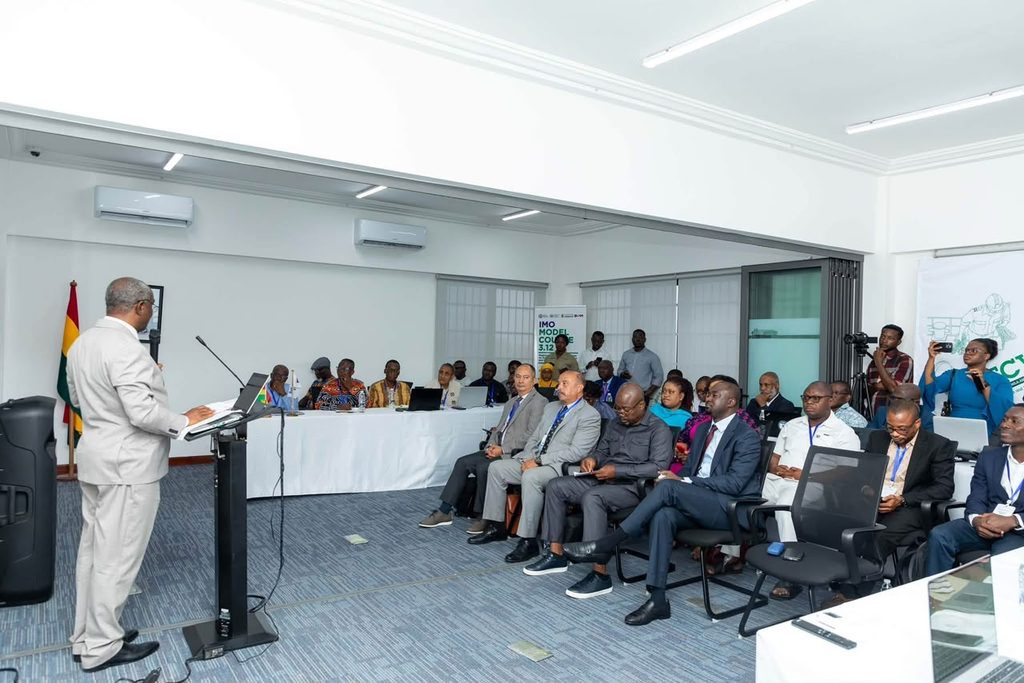
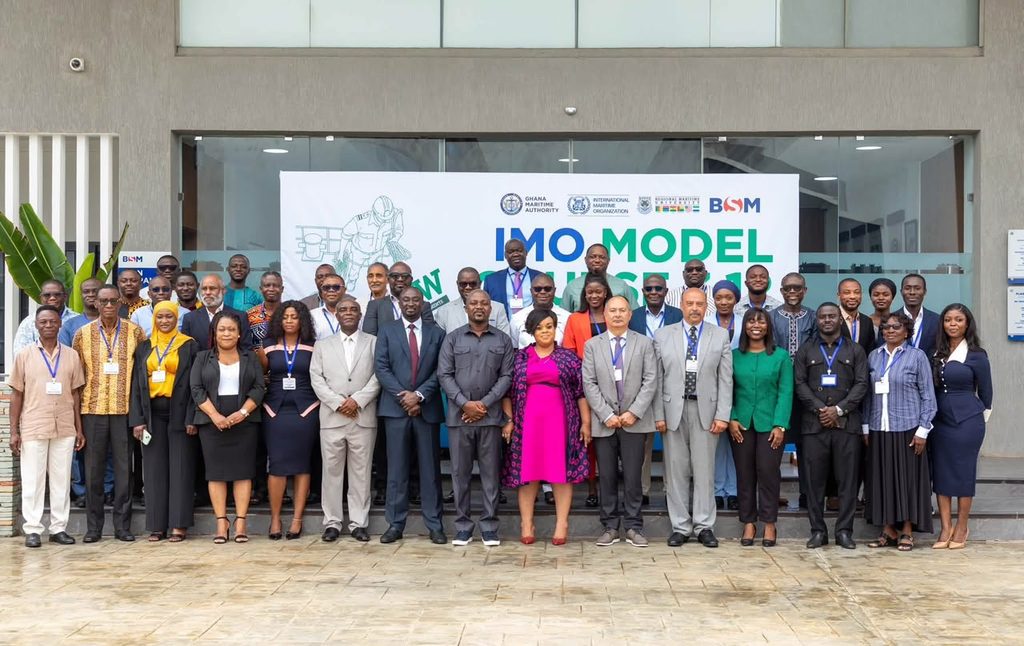
The Ghana Maritime Authority (GMA), in collaboration with the International Maritime Organization (IMO) and the Regional Maritime University (RMU), has commenced a five-day regional training programme aimed at strengthening the assessment, examination and certification of seafarers in Ghana and across the West and Central African region.
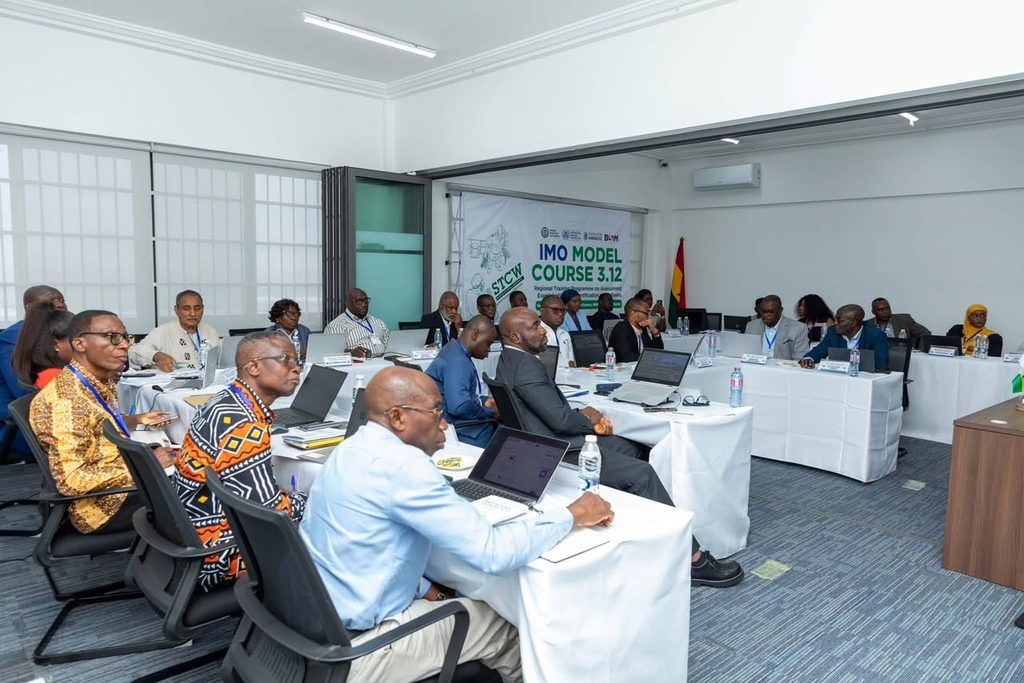
The IMO Model Course 3.12: Regional Training Programme on Assessment, Examination and Certification of Seafarers is being held from 24 to 28 August 2026 at the BSM Block (Mini Lecture Room) of the Regional Maritime University, Nungua, Accra.
The programme brings together maritime assessors, instructors and relevant personnel from five countries in the region, with the objective of updating their knowledge and skills in the latest approaches to assessing and certifying seafarers.
The training is being organised against the backdrop of rapid technological changes in the maritime industry and growing demands for higher standards of safety, environmental protection and professional competence.
Raising standards for safer shipping
Deputy Director-General of the Ghana Maritime Authority, Mubarick Masawudu, said the quality of seafarer assessment remains critical to the safety of people, vessels and cargo involved in international shipping.
He noted that more than 85 per cent of goods received globally are transported by sea, making seafarers an essential workforce behind international trade and economic activity.
“The shipping industry is very crucial to the socio-economic development of the world. Over 85 per cent of goods that we receive in our countries happen through the ocean, and the people who make it happen are our seafarers.”
According to him, assessors play a critical role in ensuring that anyone issued with a seafarer certificate possesses the competence required for the responsibilities assigned to them.
He said the constantly evolving nature of the maritime industry makes continuous professional development necessary.
“The maritime industry is very dynamic. It changes every now and then, and new technologies are coming on board. It is important that as we develop curricula to close these gaps and address technological advancement, we are equally training our assessors.”
Preparing Africa for growing demand for seafarers
The GMA Deputy Director-General also linked the training to the growing demand for qualified seafarers globally and the opportunity it presents for Africa’s youthful population.
He said the global maritime sector is expected to require thousands of additional officers in the immediate future, with the demand for seafarers projected to rise significantly in the coming decades.
For Ghana and other African countries with large youthful populations, he said, the sector could provide sustainable employment while contributing to national economies through foreign exchange earnings and remittances.
“Africa is a place where you find a youthful population that are ready, committed and eager to work. As the world is looking to Africa to be a supply nation for seafarers, we need to do the plumbing that is necessary to make this happen.”
He urged young people considering their career options to look towards seafaring as an area with opportunities for international employment and professional growth.
IMO highlights emerging technologies
The international dimension of the programme was underscored by Milton Alfredo de Jesus Baron Perico, Technical Officer with the Maritime Training and Human Element Section of the IMO’s Maritime Safety Division.
He said the training is intended to ensure that trainers, instructors and assessors remain current with emerging developments in maritime operations and technology.
“It is important for the trainers and instructors to be qualified and updated with the latest developments and the latest technologies.”
Mr Baron said the IMO is also undertaking a comprehensive review of the Standards of Training, Certification and Watchkeeping for Seafarers (STCW) Convention, with work on the review having been ongoing for the past three years.
According to him, a new package of amendments is expected by 2030, with the review expected to take account of new technologies and clean-fuel technologies emerging within the maritime industry.
Decarbonisation and the future of maritime training
The IMO representative said the industry’s transition towards cleaner operations is creating new training requirements for seafarers.
He pointed to growing concerns about pollution, greenhouse gas emissions and the impact of climate change as reasons for strengthening the capacity of maritime professionals to work with emerging technologies.
The transition towards cleaner fuels and reduced emissions, he explained, will require seafarers to acquire new knowledge and competencies.
“We are facing big challenges. For that reason, this training is so important, especially for this region.”
He said the IMO expects the programme to contribute to higher standards of safety, security and environmental protection, particularly within West and Central Africa.
Opportunity for regional maritime development
The programme also brings together regional stakeholders to share knowledge and familiarise themselves with updated approaches to assessment, examination and certification.
Mr Baron said strengthening human capacity in the region is important not only for maritime safety but also for the development of the maritime and fishing economies.
“For Ghana and the region, it’s important for the economy, for maritime economy, for fishing economy. The intention is to help to develop this important part of the world.”
For the Ghana Maritime Authority, the training forms part of its responsibility to set and maintain standards for seafarer training, assessment and certification.
Mr Masawudu said the expectation is that participating assessors will complete the programme better informed about current international requirements and better equipped to evaluate the competence of seafarers.
“Our expectation would be that by the end of this workshop, the assessors come out well informed, quite updated, and charged to even do better in their quest to ensure that the Ghanaian seafarer meets the international standards and is able to compete with peers globally.”
The five-day programme at the Regional Maritime University therefore comes at a significant point for the maritime industry, as shipping continues to evolve through technological innovation, environmental regulation and the transition to cleaner energy.
For Ghana and the wider region, the emphasis is increasingly on producing a professionally competent seafaring workforce capable of meeting both today’s demands and the changing requirements of the global maritime industry.